


Sustainable Commercial Landscaping: Biodiversity and Green Infrastructure
Sustainability has become a fundamental part of modern construction. Developers are expected to create places that not only meet planning requirements but also improve biodiversity, support local ecosystems and provide lasting value for communities. Commercial landscaping plays a central role in achieving these goals. From carefully selected planting schemes to Sustainable Drainage Systems (SuDS) and Biodiversity Net Gain (BNG), the right approach can transform a development while helping developers meet increasingly demanding environmental standards.
For housebuilders and principal contractors, working with an experienced commercial landscaping specialist ensures sustainability is built into every stage of a project rather than added as an afterthought.
Why Sustainable Commercial Landscaping Matters
Commercial landscaping is no longer judged solely on appearance. Today’s developments must balance environmental performance, long-term maintenance and the needs of future residents.
A well-designed scheme can deliver a wide range of benefits, including:
- Improved biodiversity
- Enhanced green infrastructure
- Better rainwater management
- Increased climate resilience
- Attractive public open spaces
- Greater long-term value for the development
- Improved wellbeing for residents and visitors
As planning policies continue to place greater emphasis on environmental outcomes, sustainable landscaping has become an important consideration from the earliest design stages.
Understanding Biodiversity Net Gain
Biodiversity Net Gain has become a key requirement for many developments across England. The principle is straightforward: once a project is complete, the site’s biodiversity should be measurably better than it was before construction began. Achieving this requires careful planning, ecological expertise and high-quality landscaping. Commercial landscaping contractors contribute by delivering habitats that support wildlife while remaining practical to manage over the long term.
This may include:
- Native tree planting
- Wildflower meadows
- Species-rich grassland
- Wetland habitats
- Hedgerows
- Woodland planting
- Pollinator-friendly planting
- Habitat corridors linking green spaces
The success of these measures depends on correct installation, establishment and ongoing maintenance.
Green Infrastructure Creates Better Places
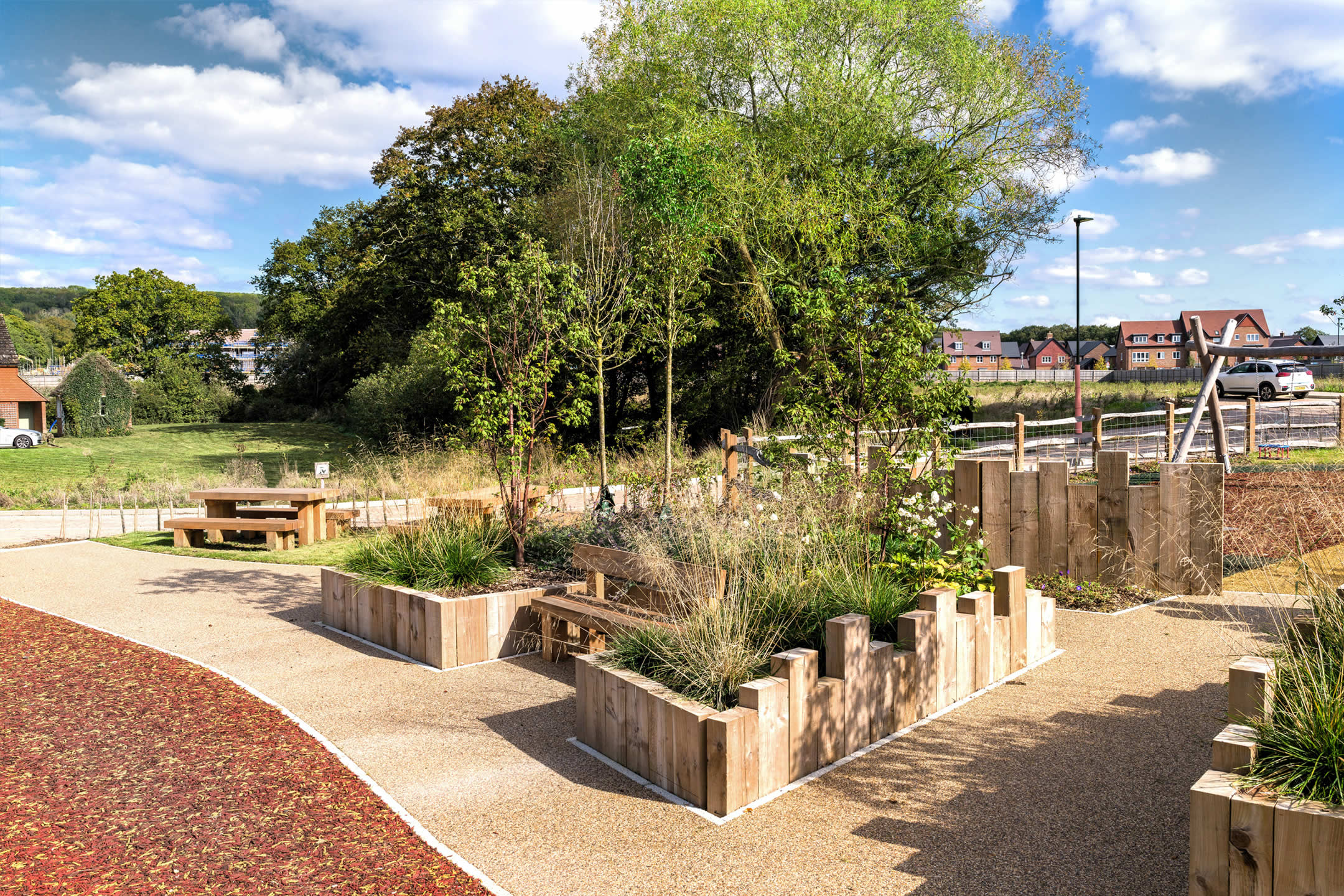
Green infrastructure refers to the network of natural features integrated throughout a development. Rather than treating green spaces as isolated areas, successful schemes connect planting, drainage and public open space into one coordinated design.
Examples include:
- Linear parks
- Community green spaces
- Tree-lined streets
- Walking and cycling routes
- Natural play areas
- Retention ponds
- Swales
- Rain gardens
- Buffer planting around residential areas
When planned effectively, green infrastructure improves both environmental performance and the quality of life for future residents.
Sustainable Drainage Systems Support Environmental Goals
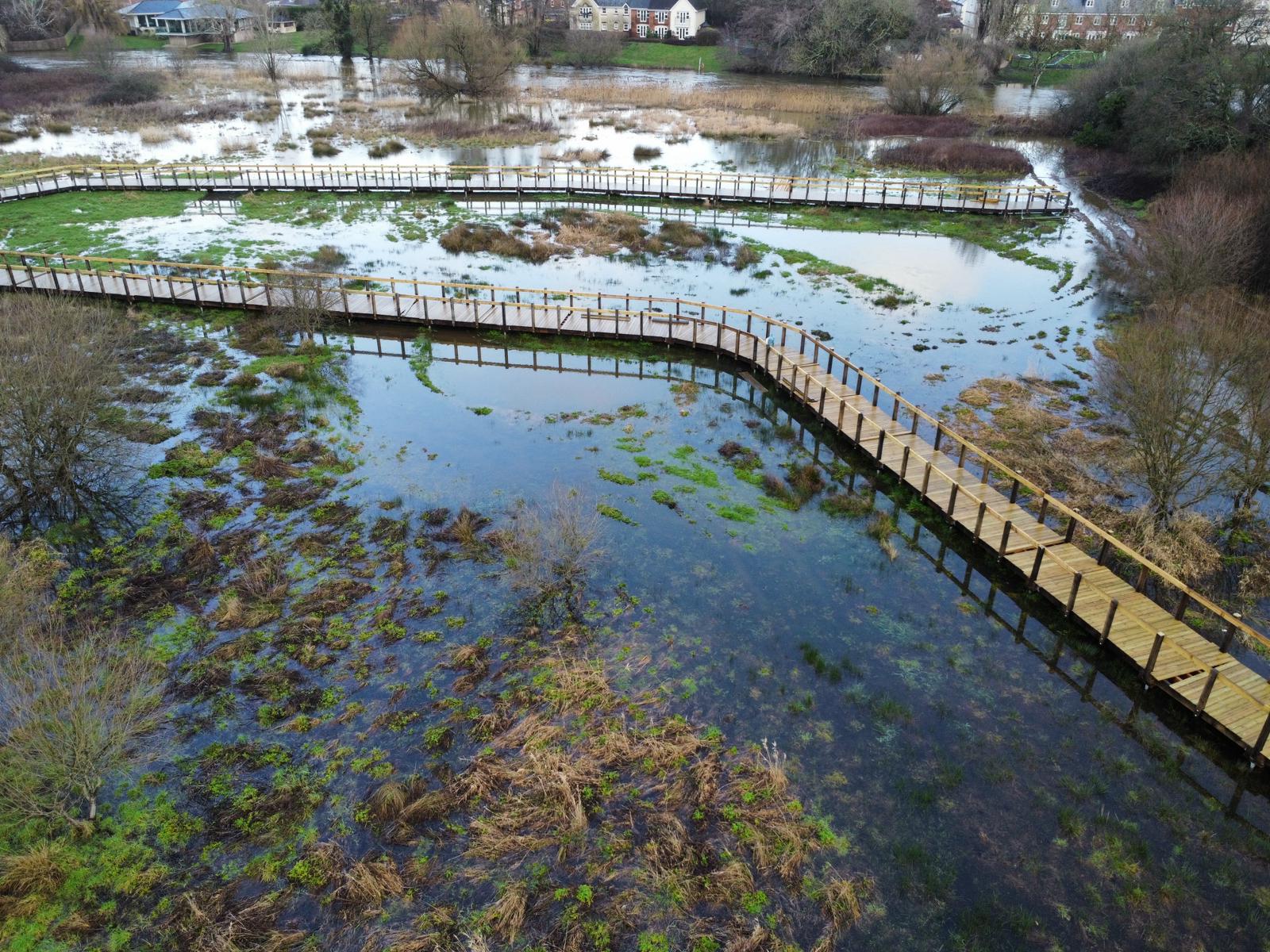
Managing surface water is an essential part of sustainable development. Commercial landscaping contractors often work alongside engineers and developers to deliver Sustainable Drainage Systems (SuDS) that reduce flood risk while creating attractive natural features.
These systems can include:
- Swales
- Detention basins
- Infiltration areas
- Rain gardens
- Balancing ponds
- Wetland planting
Well-designed SuDS features perform several functions at once by controlling water, creating habitats and enhancing the appearance of a development.
Native Planting Supports Local Wildlife
Plant selection has a significant influence on biodiversity. Native species are generally better suited to local conditions and provide food and shelter for birds, insects and other wildlife.
An effective planting strategy considers:
- Seasonal interest
- Pollinator support
- Soil conditions
- Climate resilience
- Long-term maintenance
- Habitat diversity
Rather than relying on ornamental planting alone, sustainable commercial landscaping creates balanced ecosystems that continue to develop long after construction has finished.
Long-Term Maintenance Is Essential
Sustainability does not end once planting has been completed. Trees, shrubs, wildflower areas and habitat features all require ongoing management to establish successfully and continue delivering ecological value.
Maintenance programmes may include:
- Weed control
- Watering during establishment
- Tree inspections
- Meadow management
- Replacement planting
- Habitat monitoring
- Seasonal maintenance
Developers benefit from working with contractors who understand the importance of managing these spaces throughout their lifecycle.
Sustainability Through Every Stage of a Project
Delivering sustainable commercial landscaping requires careful coordination from the earliest stages of a development. An experienced contractor can support projects through:
Planning
Working alongside developers, consultants and design teams to understand planning conditions and environmental requirements.
Design Development
Helping refine planting specifications, green infrastructure and practical construction details.
Construction
Managing hard and soft landscaping works safely while coordinating with the wider construction programme.
Establishment
Supporting successful plant growth through structured aftercare and maintenance.
Long-Term Management
Providing ongoing maintenance that protects the environmental value of completed developments.
This integrated approach helps reduce risk while improving the overall quality of the finished scheme.
Award-Winning Sustainability in Practice
Experience is particularly valuable when delivering environmentally sensitive projects. Graduate Landscapes Commercial has built a strong reputation for creating sustainable landscapes across residential, commercial and public sector developments. The business has received industry recognition for projects that combine biodiversity, ecological restoration and high-quality commercial landscaping.
One notable example is the work undertaken at Knepp Wilding, where carefully considered landscaping supported one of the UK’s best-known rewilding initiatives. Recognition through industry awards demonstrates a commitment to delivering schemes that balance ecological improvement with practical construction requirements.
Combined with decades of commercial experience, this knowledge allows Graduate Landscapes Commercial to support developers seeking innovative and environmentally responsible landscaping solutions.

Why Developers Choose Sustainable Landscaping Specialists
Large housing developments present unique environmental challenges.
Developers need contractors who understand:
- Biodiversity Net Gain requirements
- Green infrastructure design
- SuDS installation
- Native planting strategies
- Construction sequencing
- Long-term maintenance
- Health and safety
- Environmental compliance
Working with an experienced commercial landscaping company helps ensure these requirements are considered throughout the project rather than being addressed late in the construction programme.
The Future of Commercial Landscaping
Environmental expectations will continue to grow across the construction industry. Developments that successfully integrate biodiversity, sustainable drainage, high-quality planting and long-term management are likely to provide greater value for developers, residents and local communities.
Commercial landscaping has become an important investment rather than a finishing touch. It supports planning compliance, strengthens environmental performance and creates attractive places that continue to mature for years after construction is complete. By partnering with an experienced, accredited commercial landscaping specialist, developers can deliver projects that meet today’s environmental standards while creating lasting green spaces for future generations.